
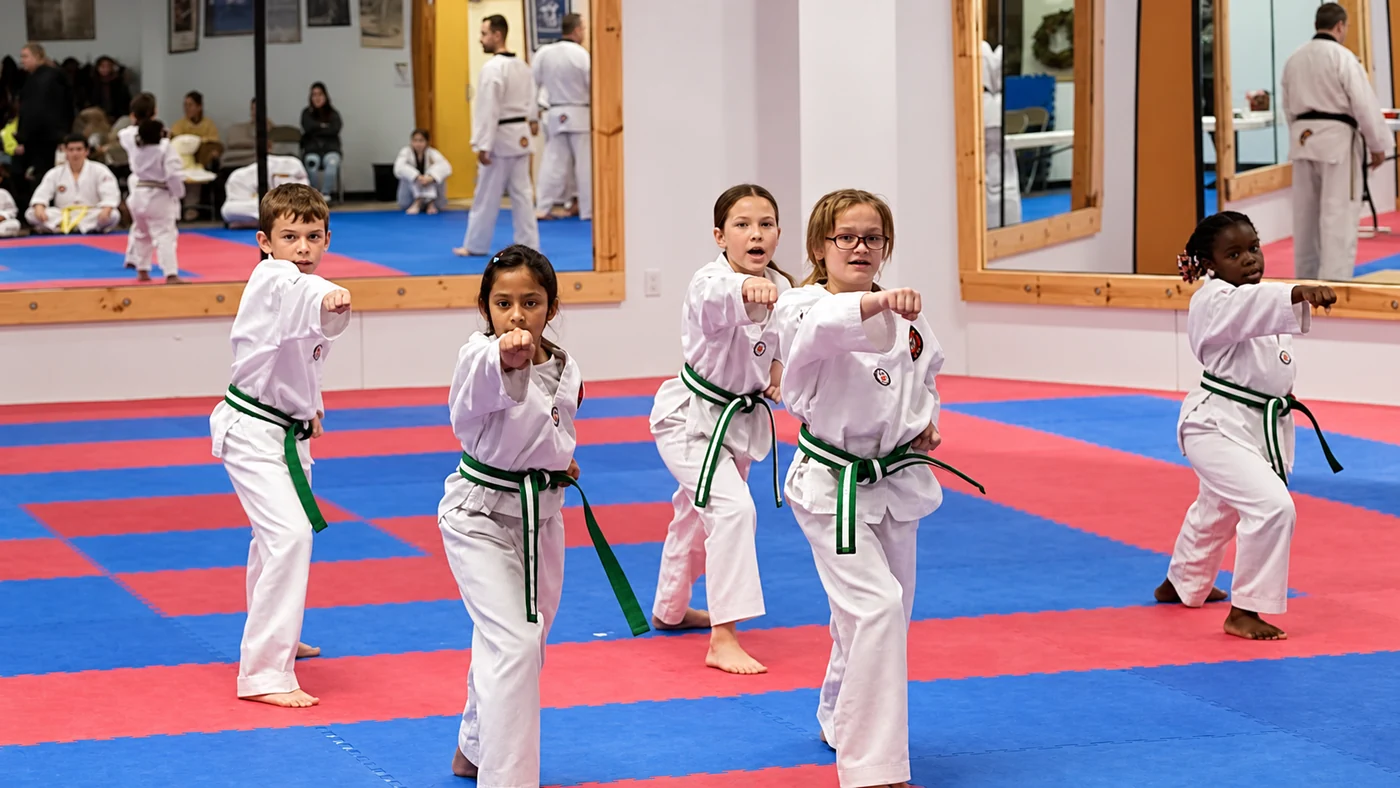
A KTA color-belt promotion test gives prepared students an opportunity to demonstrate what they have practiced and work toward their next rank. Students should arrive prepared, listen carefully, and keep working when something is difficult.
Here is what families need to handle before test day and what students can expect during the test.
KTA promotion test checklist
Before a color-belt promotion test:
- Confirm eligibility with Mr. Bickel, Alex Bickel, or a KTA instructor
- Submit the application and payment by the announced deadline
- Continue attending class consistently
- Review the curriculum and required terminology
- Prepare a clean, wrinkle-free dobok and the student’s belt
- Secure long hair and leave jewelry and valuables at home
- Follow the current test announcement for arrival time and other details
The exact schedule can change, so the current KTA announcement should always take priority over an older email or article.
First, confirm that the student is ready
KTA generally offers color-belt promotion tests about every eight to ten weeks. That does not mean every student should test at every opportunity.
Readiness depends on rank, attendance, time in training, and the student’s understanding of the required material. Higher ranks also become more cumulative, so students need to retain earlier techniques while sharpening newer ones.
Before submitting an application, ask an instructor whether the student is eligible and prepared for that test. This keeps the decision connected to actual class performance rather than the calendar alone.
Check the current application deadline
KTA usually sets the application deadline about two weeks before a color-belt test, but families should follow the deadline and payment instructions in the current test announcement.
Testing information may also be available in the student’s Kicksite School Documents Library or at KTA. If you are unsure whether the student is eligible, ask an instructor before submitting the application.
Preparation happens in regular classes
Test readiness is built through consistent attendance. Regular classes give students the repetitions they need to remember techniques, respond to corrections, and become more comfortable performing under pressure.
In the weeks before a test, students should:
- Attend class consistently
- Pay attention to instructor corrections
- Review the curriculum for their current rank
- Practice required terminology
- Ask questions while there is still time to improve
Extra practice can help, but it should reinforce what KTA instructors are teaching—not replace class or introduce conflicting details.
What students should bring on test day
Follow the current announcement, but KTA’s standard test-day reminders include:
- A clean, wrinkle-free dobok
- The student’s current belt
- Long hair secured so it does not obstruct vision
- No jewelry, watches, or unnecessary valuables
- No sparring gear or large bags unless KTA specifically requests them
Plan enough travel time to arrive when instructed. Rushing into the dojang at the last minute adds stress before the test has even started.
What happens during a promotion test?
Students demonstrate material they have practiced in class. The exact content and order depend on the student’s rank and the test format.
Testing may require students to perform in front of instructors, respond to commands, and recite terminology connected to their curriculum. Students are expected to listen carefully, stay engaged, and keep trying if they make a mistake.
A test feels different from an ordinary class because the student is being asked to show what they can do with less step-by-step coaching. That challenge is part of the value. It makes progress visible and gives the next training goal more meaning.
If a student makes a mistake
Students may forget a term, lose balance, or need a moment to reset. That is normal in a testing environment.
Parents can help by keeping the day calm and avoiding last-minute pressure. A useful reminder is simple:
“Listen carefully, do your best, and keep going.”
The useful response is to listen for the next instruction, reset, and continue.
How parents can support the process
The most useful parent support happens before and after the test:
- Help protect the student’s class routine
- Make sure the application is completed on time
- Help prepare the uniform and belt
- Encourage practice without trying to become the instructor
- Recognize effort, composure, and improvement—not only the new belt
This keeps testing connected to long-term growth rather than turning one evening into an all-or-nothing judgment.
What happens after the test?
KTA will communicate the result and next steps. When a student advances, the new rank creates a new curriculum goal—not an endpoint.
The best next move is to return to class, learn the expectations of the new rank, and begin building toward the next milestone. Belt progression is most useful when it reflects continued training rather than a brief burst of preparation before each test.
Two common questions
Are belt tips required before a student can test?
No. KTA’s belt tips are optional and are not required for promotion. Readiness is based on the broader training picture, including attendance, time at rank, and understanding of the curriculum.
What if a student cannot attend the scheduled test?
Tell KTA as soon as possible. A make-up opportunity may sometimes be available, but families should not assume one will be offered for every test.
The next step
Ask a KTA instructor about eligibility before the current application deadline. Then keep the plan simple: attend class consistently, review the assigned material, prepare the uniform and belt, and follow the arrival instructions in the current test announcement.
If you still have a testing question, contact Korea Taekwondo Academy or speak with an instructor during your next visit.
Join the conversation
Comments are reviewed before they appear. For enrollment or questions about your student, contact KTA directly. Please do not include private student information.